
Backrooms (2026) Review: Liminal Spaces, Melted Realities & the Complexity of Memory
Some spoilers included!

At just twenty years old Kane Parsons has become the youngest filmmaker to open at number one in the US with his psychological horror film Backrooms. The film took in a whopping $82 million during its first weekend, which is also a record for the production studio A24.
Based on Parsons own YouTube series of the same name, Backrooms was inspired by the ‘creepypasta’ of the same name — ‘creepypasta’ being the online phenomenon of legends or folktales shared across the Internet with the intent to scare the reader, with the likes of Slender Man being one of the most widely known.
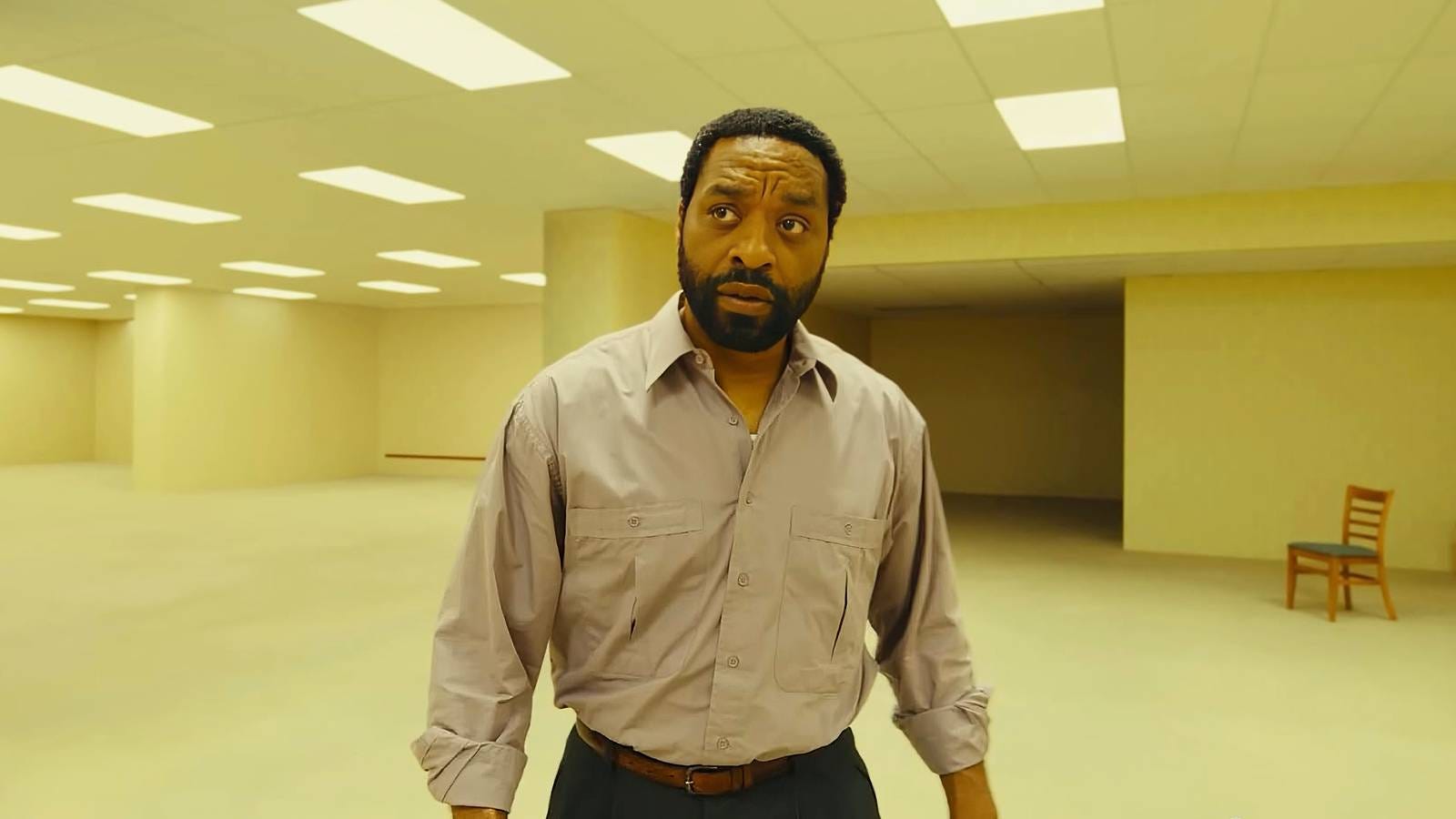
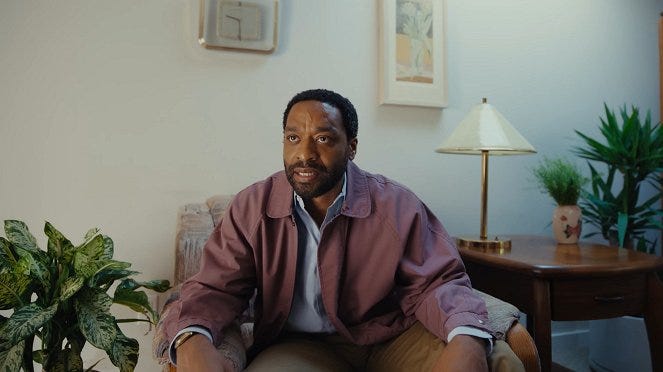
Parson’s Backrooms is a chilling psychological thriller that plays with the melting boundaries of reality to explore concepts of time, memory and infinite roaming space. Clark (Chiwetel Ejiofor) is a failed architect who owns a furniture store and is currently in therapy. His therapist, Mary (Renate Reinsve), is trying to help Clark break old cycles that are stopping him from succeeding in life, but she’s also dealing with her own past trauma.
In the basement of his furniture store, Clark discovers that he can move through one of the walls and into a strange and seemingly endless expanse of bizarre rooms. Clark explores the space but quickly retreats when it’s apparent that he’s not alone. He tells Mary about his discovery but is met with skepticism and she worries about Clark’s declining mental state.
Clark enlists his assistant manager Kat (Lukita Maxwell) and her boyfriend Bobby (Finn Bennett) to explore the backrooms and bring back proof of its existence but when Clark doesn’t return to therapy, Mary goes looking for him and finds herself in the same dangerous and erratic unknown.
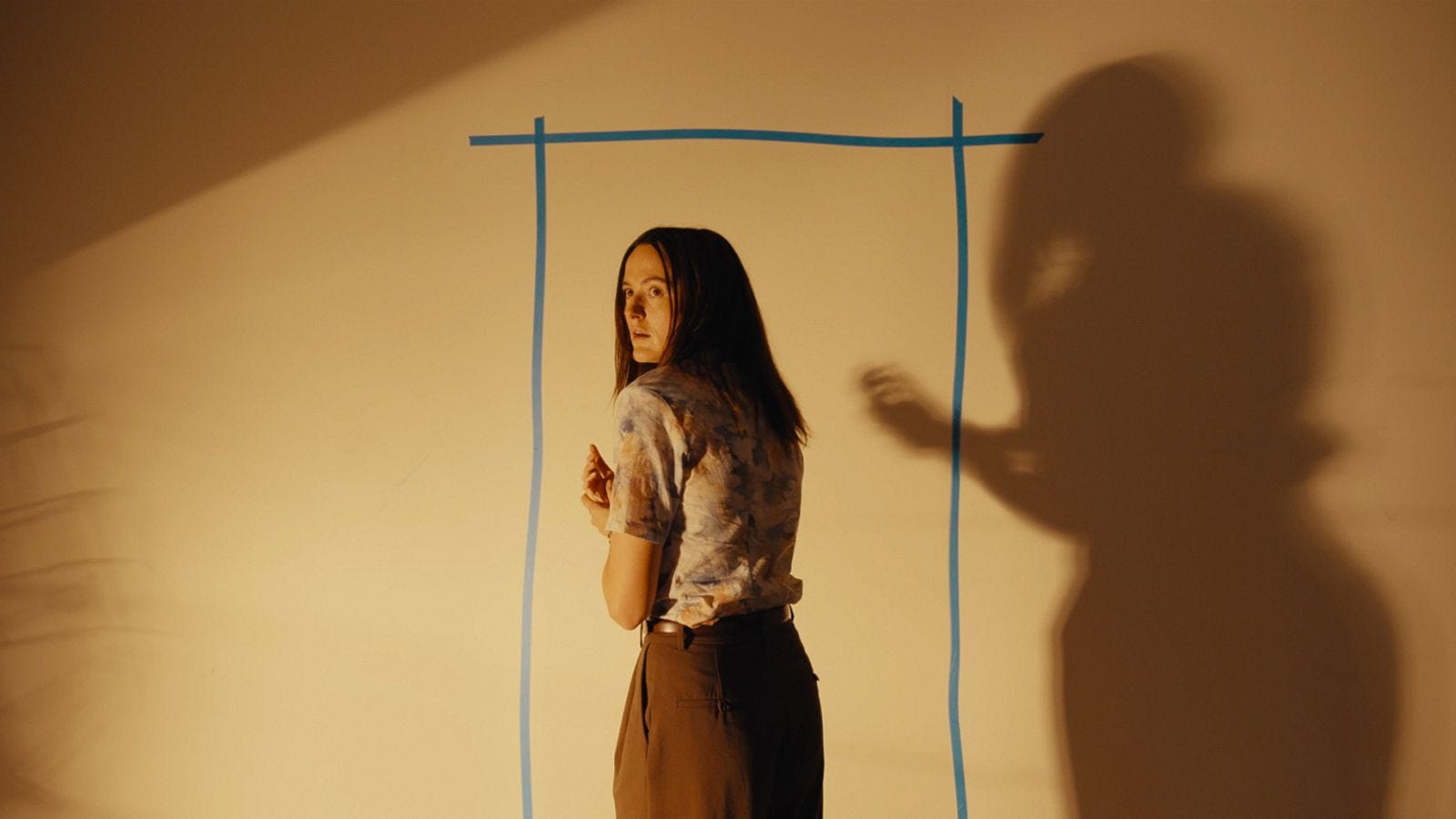
From the film’s concept to its execution, Backrooms is such an impressive story idea and Parsons handles it with real skill and a very focused, astute directorial eye. It’s a sharp and unnerving watch and it’s the kind of text that film students, especially horror lovers, are going to lose their minds over.
The concept of these big, strange, uncanny rooms all connecting in infinite loops is naturally unsettling and make for a brilliant location for much of the film’s narrative. What better place to have your characters get lost within than these liminal spaces that, at first glance, are unremarkable but become stranger as you explore them.
These kinds of liminal spaces (empty office rooms, hospital corridors, deserted waiting areas) are inherently a little spooky due to their utter mundanity and the ways in which our minds cannot seem to help but imagine a rip in the seams of normality; forever looking for ways to find something outside the realms of our own boring reality, even if that is through fear.
Clark’s discovery of the backrooms is immediately unsettling then as they begin so almost like reality but just a little off. There is obviously something not right in the backrooms; the piles of office furniture, the changing shape of the rooms and the doors that lead to new spaces, but they’re close enough to normality to lull you into a false sense of security also.
It’s only as Clark and the others delve deeper into the backrooms, pushing through any voice in their heads that tell them something isn’t right, that they discover the terror and danger they truly hold. This makes for very visceral watching; I could feel my limbs twitch in anticipation of what could be waiting around each new corner, I felt the claustrophobic intensity of the changing spaces and I very nearly shouted ‘fuck no’ in a packed cinema.
The backrooms work as an interesting representation of how our minds process and hold onto memories, the messiness of it all, the way we replay memories so frequently and so aligned with our own perceptions of truth that they are consistently altered, often drifting further from reality the more we replay them.
Clark experiences this initially without even really realising it. His own memories are melted in the backrooms in strange and uncanny ways. His therapy work with Mary could be the very cure for losing himself in the backrooms, she’d already tried to encourage Clark to think differently about his painful memories, but the longer you spend within the backrooms, the harder it is to end the loop of your own destruction.
Clark doesn’t have to change or better himself in the backrooms, he can remain the same version of himself that he recalls in his memories; a victim, somebody cheated out of the life he had planned, and in the backrooms, he doesn’t have to face an alternate true. That is where the real danger of the backroom lies, if you’re not careful, you’ll fall victim to your own percieved truth and become a monster of your own making.
This theory is especially interesting then once Mary enters the backrooms and experiences fragments of her own memories melting into the backroom’s mystery. Mary has based her life’s work on teaching others how to end cycles of self-sabotage, the loops we find ourselves in, and in-turn heal from the trauma of having a mother who was agoraphobic and kept her locked up inside.
One could argue that the difference in Clark and Mary’s experience within the backrooms all comes down to how we revisit memories, how we frame them in our minds and process them in a way that allows us to escape the intensity of victimhood, even when that may well be our experienced truth.
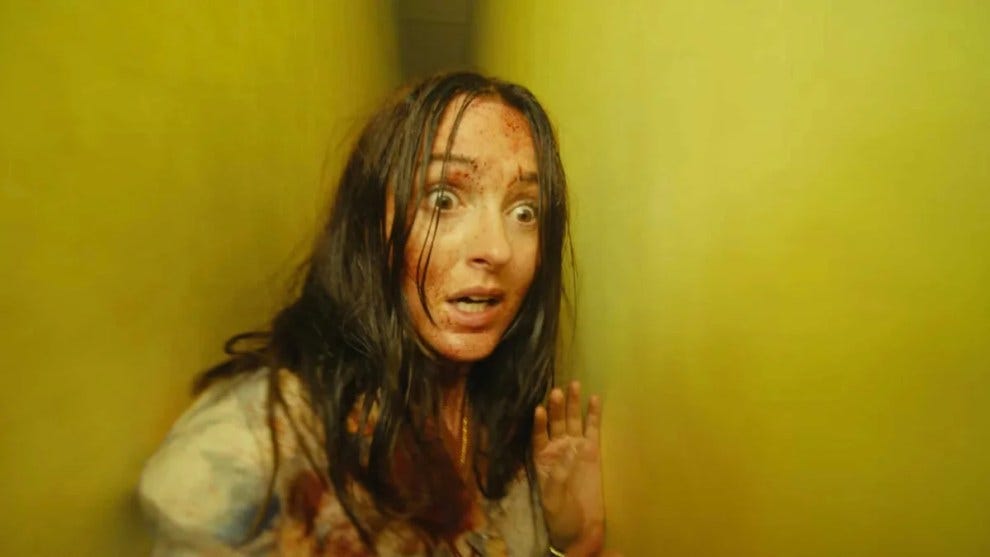
Beyond just the backrooms themselves, the people we meet there are these uncanny valley nightmares. They appeared as people if we experienced glitching in real time or if the devil had it’s own version of The Sims. For me, these were some of the most unsettling moments within Backrooms; when the line between human and monster were blurred.
Thinking about this further, there is a reoccurring analogy used and quoted by Clark throughout the narrative of Backrooms: "It's like describing a dog to someone who's never seen a dog before and then asking them to draw it"
If we combine the ‘dog analogy’ with the strange non-human’s we meet in the backrooms, one could argue that this is an interesting metaphor for AI. How no matter how much humanistic code we feed it, it will never be legitimately human, there will always be something uncanny and wrong about it.
This is just one theory based off the ‘dog analogy’ featured in the narrative but, in general, there is so much to explore and question from this one piece of dialogue. This could relate to the concept of uncanny valley and AI concerns, as discussed above, but I’d argue that it is also another way to look at memory, this time specifically when it comes to trauma.
Could the ‘dog analogy’ be another way to represent the weight and difficulty of discussing trauma? Mary’s trauma is told to us through flashbacks and memories, we see how Mary must carry the burden of trauma in her everyday, how it shows up randomly and without consent.
I wonder then whether the ‘dog analogy’ is another way of explaining the burden of trauma, of discussing traumatic memories, and the ways in which it is impossible to ever properly be able to get someone to understand that which has not happened to them. I think that this all plays into the running theme of our memories and how we process them, how easy it is to be at their mercy.
I haven’t stopped thinking about Backrooms since I watched it and honestly, I am just thrilled to have been able to watch and love two great horror films two weekends in a row (You can read my Obsession review here). As a genre, it’s about time horror gets the recognition it deserves (thank you, Sinners, for bagging those awards) and for independent and new filmmakers to be able to tell these kinds of smart, unnerving stories.
Parsons builds such morbid mystery within the backrooms that it’s impossible not to find yourself wanting to see and know more. While the final act ends a little abruptly and certainly leaves you with more questions than answers, Parsons has allowed himself the room to create more stories and potential franchise growth.
I’m here for it.
okay looks like i gotta book tickets to see this ASAP!!! (cinema membership summer here i come)
Need to see this!